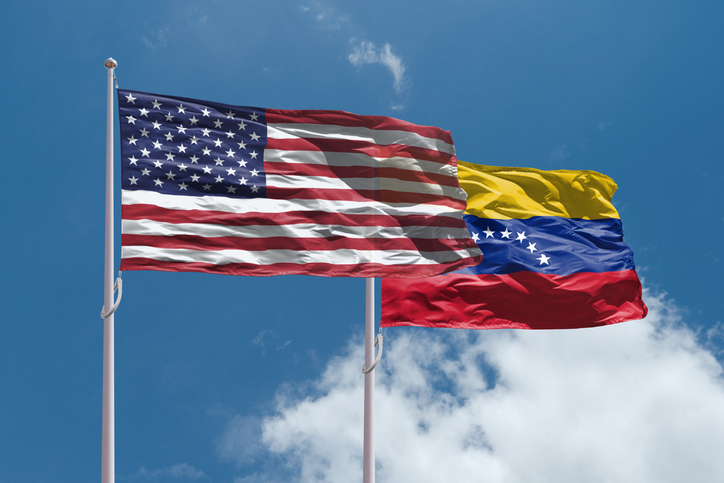
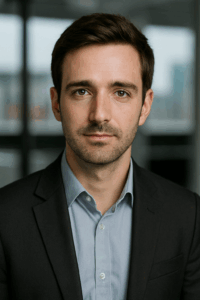
When Nicolás Maduro — the ousted Venezuelan president captured by U.S. special forces in January 2026 — walked into a Manhattan federal courtroom to face narcoterrorism and drug trafficking charges, he did so flanked by one of the most accomplished criminal defense attorneys in the country. The choice of Barry J. Pollack as lead counsel wasn’t just a legal decision. It was a statement.
Understanding why Maduro chose Pollack — and what Pollack brings to a case this complicated — offers a compelling window into how skilled criminal defense lawyers operate at the highest levels of the American justice system. Whether the defendant is a head of state or an everyday person facing federal charges, the principles that make a defense attorney effective remain the same.
Key Takeaways
- Nicolás Maduro and his wife Cilia Flores were arraigned in the Southern District of New York on January 5, 2026, on charges including narcoterrorism conspiracy, cocaine importation conspiracy, and weapons offenses.
- Maduro retained Barry J. Pollack of Harris St. Laurent & Wechsler LLP — a Washington, D.C.-based attorney and former president of the National Association of Criminal Defense Lawyers.
- Pollack previously secured Julian Assange’s release through a carefully negotiated plea deal and won a rare acquittal in an Enron-related prosecution.
- Defense counsel has already challenged the legality of Maduro’s military capture and argued that the U.S. government is improperly blocking access to defense funds.
- The case is being prosecuted by the U.S. Attorney’s Office for the Southern District of New York, one of the most powerful federal prosecutorial offices in the country.
- Even in landmark cases involving foreign leaders, the core challenge of criminal defense — protecting a client’s rights against the full weight of government power — remains universal.
The Charges Against Maduro
The indictment, unsealed on January 3, 2026, lays out a sweeping four-count case against Maduro and several co-defendants, including his wife, his son, and senior Venezuelan officials. According to the Department of Justice, prosecutors allege that Maduro orchestrated a 25-year conspiracy to flood the United States with cocaine by partnering with designated foreign terrorist organizations — among them the FARC, the ELN, the Sinaloa Cartel, and the Tren de Aragua gang.
The four charges are:
- Narcoterrorism conspiracy — knowingly providing material support to U.S.-designated foreign terrorist organizations
- Conspiracy to import cocaine — allegedly coordinating the shipment of thousands of tons of cocaine into the United States
- Possession of machine guns and destructive devices in connection with drug trafficking
- Conspiracy to possess machine guns and destructive devices in furtherance of the drug operation
Each count carries a potential maximum sentence of life in prison. Maduro and Flores both entered not guilty pleas before U.S. District Judge Alvin K. Hellerstein.
Who Is Barry Pollack?
Pollack isn’t a household name outside legal circles — but inside them, his reputation is formidable. A graduate of Georgetown University Law Center, where he earned his J.D. magna cum laude and was inducted into the Order of the Coif, Pollack went on to serve as an Assistant Federal Public Defender in Maryland before building one of the most distinguished white-collar and national security defense practices in the country.
He is a Fellow of the American College of Trial Lawyers and a Fellow of the American Board of Criminal Lawyers — two of the most selective peer-review honors in the profession. He served as president of the National Association of Criminal Defense Lawyers and taught federal criminal trial practice at Georgetown as an adjunct professor.
His peers describe him in notably consistent terms. Andy Birrell, the current NACDL president, told NBC News that Pollack is “meticulous” and “unassuming,” with a rare ability to make complex legal concepts accessible to juries. “He’s a person that absolutely reeks credibility,” Birrell said. C. Melissa Owen, president-elect of the NACDL, offered a striking assessment: someone with “Ivy League intellect with Midwestern sensibilities” when communicating with ordinary people.
Those qualities matter enormously in federal court.
A Track Record Built on Landmark Cases
What distinguishes Pollack isn’t just his credentials — it’s his results in cases where the odds were stacked against him.
The Enron Acquittal
Among the dozens of prosecutions arising from the collapse of Enron, one of the largest corporate scandals in American history, Pollack secured a complete acquittal for Michael Krautz, a former in-house accountant. Acquittals in Enron-related cases were extraordinarily rare. Pollack’s firm later described it as one of only two in the entire wave of prosecutions that followed the company’s implosion.
The Tankleff Exoneration
Pollack also represented Martin Tankleff, a New York man wrongfully convicted of killing his parents as a teenager. Tankleff served 17 years — more than 6,300 days — before Pollack successfully fought to have the convictions reversed and all charges dismissed. It stands as one of the more significant wrongful conviction reversals in New York history.
The Assange Plea Deal
Perhaps Pollack’s most internationally recognized achievement was managing Julian Assange’s legal exposure in the United States for over a decade. The WikiLeaks founder faced charges under the Espionage Act carrying potential sentences that could have meant life imprisonment. In 2024, Pollack helped broker a plea deal that allowed Assange to plead guilty to a single felony count and walk free. The outcome was a testament to the kind of strategic, long-game legal maneuvering that defines elite criminal defense.
It is precisely that experience — defending internationally controversial figures in cases loaded with geopolitical complexity — that makes Pollack a fitting choice for Maduro.
The Defense Strategy Taking Shape
From the earliest court appearances, Pollack has signaled that this will not be a passive defense. Two primary legal battlefronts have already emerged.
The Legality of the Capture
Maduro was seized on January 3, 2026, by U.S. special forces during Operation Absolute Resolve — a military strike on Venezuelan territory. Pollack has indicated he will challenge the legality of that military abduction, likely arguing violations of international law, the United Nations Charter, and standards governing how foreign nationals may be brought into U.S. jurisdiction.
Courts have historically been reluctant to dismiss cases solely on the grounds of extraterritorial arrests — a doctrine sometimes called male captus, bene detentus — but the unprecedented nature of a military extraction of a sitting head of state gives Pollack real legal territory to contest. As legal analysts at Lawfare noted, this case may be distinguishable from existing precedent simply because there is no true precedent for it.
The Defense Funding Battle
In a development that has drawn significant attention, Pollack has argued before Judge Hellerstein that the U.S. government is improperly blocking Maduro from using Venezuelan state resources to fund his defense. “He is entitled to use those resources to defend himself,” Pollack told the court. Prosecutors countered that defendants cannot access third-party funds to which they have no lawful personal claim.
Judge Hellerstein declined to dismiss the case but has not yet ruled on the funding question. How that gets resolved could shape the scope of the entire defense.
What This Case Illustrates About Criminal Defense
The Maduro case is extraordinary in its scale. But the underlying dynamics will be familiar to anyone who has faced serious criminal charges at the federal level.
A defendant confronted by federal prosecutors faces an institution with nearly unlimited investigative resources, years of case preparation, and the full backing of the U.S. government. The indictment against Maduro runs 25 pages and references co-conspirators who have already pleaded guilty and may cooperate as witnesses. That is the architecture of a federal prosecution built to win.
Against that, a skilled defense attorney does several things. They challenge the constitutional and procedural foundations of the case — how evidence was gathered, how the defendant was brought into custody, whether the charges are properly constructed. They contest the credibility and reliability of government witnesses. They demand that the prosecution prove every element of every charge beyond a reasonable doubt, to a jury of ordinary people who have no prior commitment to the outcome.
Pollack’s work on behalf of Maduro is the most high-profile example of that function playing out in real time. But the same adversarial process — the same constitutional protections, the same burden of proof — applies whether someone is accused of narcoterrorism or a drug offense in a local court.
The Right to a Defense
The Sixth Amendment guarantees every person accused of a crime the right to counsel. That right exists not because defendants are presumed innocent until proven guilty in some abstract sense, but because the alternative — prosecution without meaningful opposition — corrodes the entire structure of justice. Even the most serious charges require proof. Even the most powerful government must meet its burden.
Barry Pollack, standing next to Nicolás Maduro in a Manhattan courtroom, is exercising that principle in one of its most dramatic expressions. The same principle applies every day in courtrooms across the country, in cases that never make the news.
If you or someone you know is facing serious criminal charges and needs experienced legal counsel, the quality of your representation matters. For those in the New York area, Contact Ed Palermo — a skilled criminal defense lawyer serving Huntington and the surrounding communities who understands what is at stake when you face the weight of a criminal prosecution.
Frequently Asked Questions
What charges is Nicolás Maduro facing in the United States?
Maduro faces four federal counts in the Southern District of New York: narcoterrorism conspiracy, conspiracy to import cocaine, possession of machine guns and destructive devices, and conspiracy to possess such weapons. Each count carries a potential maximum sentence of life imprisonment.
Who is defending Nicolás Maduro?
Maduro is represented by Barry J. Pollack, a Washington, D.C.-based criminal defense attorney with Harris St. Laurent & Wechsler LLP. Pollack is a former president of the National Association of Criminal Defense Lawyers and is known for his prior representation of WikiLeaks founder Julian Assange.
What is narcoterrorism under U.S. law?
Narcoterrorism charges arise when prosecutors allege that drug trafficking was conducted in coordination with, or provided material support to, a designated foreign terrorist organization. The charges carry some of the most severe penalties in the federal criminal code, including life imprisonment.
How was Maduro brought to the United States?
According to U.S. officials, Maduro was captured by U.S. special forces on January 3, 2026, during Operation Absolute Resolve — a military strike in Caracas, Venezuela. He and his wife were transferred to the USS Iwo Jima and subsequently flown to the United States.
Can a criminal defense lawyer challenge an illegal arrest?
Yes. Defense attorneys frequently challenge the manner in which a defendant was arrested or brought into custody. While courts have not always dismissed charges based on extraterritorial arrests alone, an arrest that violates constitutional protections or international law can be the basis for motions to suppress evidence or dismiss charges.
What court is handling the Maduro case?
The case is being handled by the U.S. District Court for the Southern District of New York, one of the most prominent federal courts in the country. The prosecution is led by the U.S. Attorney’s Office for the Southern District, currently headed by Jay Clayton.
What did Barry Pollack accomplish in the Julian Assange case?
Pollack served as Assange’s U.S. legal strategist for more than a decade, ultimately helping negotiate a 2024 plea deal in which Assange pleaded guilty to a single felony count under the Espionage Act and was released from custody. The deal was widely viewed as a significant legal achievement given the severity of the original charges.
What does the Sixth Amendment guarantee in criminal cases?
The Sixth Amendment to the U.S. Constitution guarantees the right to a speedy and public trial, the right to confront witnesses, and — critically — the right to the assistance of counsel in all criminal prosecutions. This applies to federal and state cases alike and is a cornerstone of the American adversarial legal system.