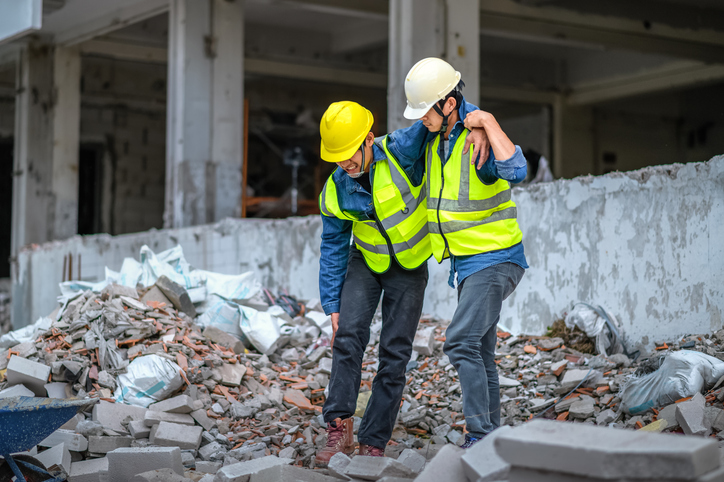

Construction is one of the most essential industries in America — and one of the most unforgiving. Every day, workers across the country climb scaffolding, operate heavy machinery, dig trenches, and navigate jobsites where a single miscalculation can have permanent, life-altering consequences. Behind the framing of new homes and the pouring of concrete lies a sobering reality: construction remains among the deadliest industries in the United States.
Understanding how these accidents happen, what rights injured workers hold, and why legal representation matters — especially in California’s complex legal landscape — is not just useful information. For workers and their families, it can be the difference between financial survival and devastating loss.
The Numbers Behind the Risk
The data is difficult to ignore. According to the U.S. Bureau of Labor Statistics, construction and extraction workers experienced 1,032 fatalities in 2024 alone — a figure that underscores just how persistently dangerous the field remains even as safety standards improve. That same year, the overall fatal work injury rate across all industries dropped to 3.3 per 100,000 full-time workers, yet construction consistently outpaces nearly every other sector.
What drives so many of these deaths? The Occupational Safety and Health Administration (OSHA) has long identified what it calls the “Fatal Four” — the four hazard categories responsible for roughly 65% of all construction worker deaths:
- Falls — the single leading cause, accounting for more than a third of all construction fatalities
- Struck-by incidents — involving falling objects, vehicles, and heavy equipment
- Electrocution — from contact with live wires, unprotected circuits, and overhead power lines
- Caught-in/between accidents — workers trapped, crushed, or pulled into machinery
In fiscal year 2024, OSHA reported a 20% decline in fatal falls, down to 189 deaths from 234 the previous year — a meaningful improvement tied to targeted enforcement and National Emphasis Programs. Yet that number still represents 189 workers who did not come home. Progress, while real, has not eliminated the crisis.
How These Accidents Happen
Construction sites are dynamic environments — layouts change daily, new subcontractors arrive, equipment moves constantly. That complexity creates conditions where accidents are not random misfortune but often the predictable result of preventable failures.
Falls remain the dominant threat. Workers fall from scaffolding, through unprotected floor openings, off ladders placed on unstable surfaces, and from rooftops where guardrails were never installed. OSHA’s fall protection standards require protective measures whenever workers are at heights of six feet or more — yet fall protection remains the single most frequently cited OSHA violation year after year, with over 6,500 citations issued in fiscal year 2024.
Struck-by accidents are particularly brutal in their unpredictability. Approximately 75% involve heavy equipment — cranes, excavators, dump trucks — where blind spots are wide and reaction time is nearly zero. Unsecured tools or materials falling from upper levels can strike workers below with lethal force.
Electrocutions often stem from contact with unmarked underground lines, inadequate lockout/tagout procedures, and failure to de-energize circuits before maintenance. Wet conditions compound the risk dramatically.
Caught-in/between accidents kill workers when trenches collapse without adequate shoring, when clothing or limbs become entangled in rotating machinery, or when heavy equipment pins someone against a fixed structure. The Centers for Disease Control and Prevention (CDC) identifies these incidents as particularly fatal precisely because there is often no warning before they occur.
The Full Cost of a Construction Accident
The financial toll of construction accidents on the American economy is staggering — estimated at over $5 billion annually in healthcare costs, lost productivity, and reduced quality of life for affected families, according to research published by the Center for Construction Research and Training (CPWR). Workers’ compensation claims for non-fatal falls alone account for roughly $2.5 billion each year.
But statistics strip the human dimension from what are, at their core, devastating personal tragedies. Construction workers who survive serious accidents frequently face traumatic brain injuries, spinal cord damage, amputations, severe burns, and crush injuries that require years of rehabilitation. They lose income during recovery — sometimes permanently. Families lose primary earners. Children grow up watching a parent navigate disability without adequate support.
That is why the legal framework surrounding these accidents matters so much.
The Legal Landscape for Injured Construction Workers in California
California has some of the most robust worker protection laws in the country, and Sonoma County’s construction boom — including in Santa Rosa — means these protections are more relevant than ever.
Workers’ Compensation: The Starting Point
Under California Labor Code Section 3700, virtually every employer with at least one employee is required to carry workers’ compensation insurance. This is a no-fault system, meaning an injured worker does not need to prove that their employer was negligent to receive benefits. Whether the accident was caused by a coworker’s mistake, a momentary lapse in judgment, or a hazardous condition, coverage generally applies.
Workers’ compensation in California can cover:
- All necessary medical treatment, including surgeries, prescriptions, and physical therapy
- Temporary disability payments while a worker recovers (currently ranging from $252.03 to $1,680.29 per week, updated to reflect the state average weekly wage)
- Permanent disability benefits if injuries prevent a full return to work
- Supplemental job displacement benefits for retraining
- Death benefits for the dependents of workers killed on the job
The California Department of Industrial Relations oversees the workers’ compensation system and provides guidance for injured workers navigating claims. Reports of injury should be made to an employer as quickly as possible, and California law recommends doing so within 30 days of the incident.
When Workers’ Comp Is Not Enough: Third-Party Claims
Here is where California law offers injured construction workers something that workers’ compensation alone cannot: the right to pursue a third-party personal injury lawsuit when someone other than an employer contributed to the accident.
Construction sites routinely involve multiple parties — general contractors, subcontractors, equipment manufacturers, property owners, and suppliers. If a defective piece of scaffolding manufactured by a third party caused a fall, or if a subcontractor’s negligence led to an electrocution, the injured worker may have grounds to sue that third party directly. Unlike workers’ compensation, a personal injury lawsuit can recover pain and suffering damages, full wage loss, and other categories of harm that the workers’ comp system explicitly does not cover.
This distinction is critical and frequently misunderstood. Filing a workers’ compensation claim does not forfeit the right to pursue a third-party lawsuit.
Santa Rosa and Sonoma County: A Distinct Legal Environment
Santa Rosa and the broader North Bay region have seen sustained construction growth, from residential rebuilding following the 2017 Tubbs Fire to ongoing commercial and infrastructure development. With that growth comes heightened exposure to jobsite injuries.
Under California law, most construction accident personal injury claims carry a two-year statute of limitations from the date of injury. Workers’ compensation claims have a separate and shorter deadline — California Labor Code Section 5405 generally gives injured workers one year to file a workers’ comp claim, though timing can shift depending on when the injury was discovered or when benefits were last provided.
If a public entity — a city, county, or state agency — was involved in or responsible for the accident, the timeline can shrink to as little as six months for an initial government tort claim under the California Government Claims Act. Missing this deadline can permanently bar recovery, regardless of the strength of the underlying case.
The complexity of identifying liable parties, preserving evidence, meeting multiple deadlines, and negotiating with aggressive insurance carriers makes professional legal guidance not just advisable but essential. If you or someone you know has been seriously hurt at a construction site in Sonoma County, the most important step is to Contact a Santa Rosa construction accident lawyer before accepting any settlement offer or giving recorded statements to an insurer.
What Workers and Families Should Do After an Accident
The steps taken in the immediate aftermath of a construction accident can significantly affect the outcome of any legal claim. Practical guidance from California’s legal framework and injured worker resources suggests the following:
Seek medical care immediately. Health comes first — and a documented medical record from the time of injury is one of the most important pieces of evidence in any subsequent claim. Be explicit with treating providers that the injury occurred at a worksite.
Report the injury to your employer. California law requires that work accidents be reported within 30 days to preserve workers’ compensation eligibility. Failure to do so can jeopardize benefits.
Document everything possible. Photographs of the accident scene, the hazard that caused the injury, and any equipment involved can be invaluable. Collect contact information from any witnesses before they leave the site.
Do not give recorded statements to insurance companies without counsel. Insurers are experienced at eliciting statements that minimize claim value. Speaking with an attorney first is a reasonable precaution.
Understand your full range of options. Workers’ compensation is the floor, not the ceiling. A qualified attorney can assess whether third-party claims exist and what the realistic value of all available claims might be.
The Broader Push for Safer Worksites
Legal recourse is critically important for injured workers and their families — but prevention remains the most powerful tool. OSHA’s targeted enforcement programs have produced measurable results: fatal trench collapses dropped nearly 70% between 2022 and 2024, and fatal falls declined 20% in the same period. These gains were not accidental; they followed intensive outreach, employer training, and enforcement actions under zero-tolerance policies.
Construction companies that invest in safety programs see real returns. Research cited by OSHA suggests employers save roughly $4 to $6 for every $1 invested in workplace safety — a figure that reflects reduced workers’ compensation premiums, reduced liability exposure, and reduced lost productivity.
CPWR’s construction safety research continues to inform best practices across the industry, including evidence-based recommendations on fall protection, heat illness prevention, and the particular risks faced by younger workers. According to the Bureau of Labor Statistics, over 60% of construction accidents occur within an employee’s first year on the job — a statistic that underscores the urgent need for proactive onboarding training.
Conclusion: The Law Is There. Use It.
Construction workers build the communities the rest of us live and work in. When the industry fails to protect them, the law provides a framework for accountability — but that framework only functions when injured workers and their families understand their rights and act on them.
The stakes in construction accident cases are high. Injuries are often catastrophic, recovery is long, and insurers are motivated to minimize payouts. California’s legal system offers meaningful protections, from robust workers’ compensation coverage to third-party personal injury claims — but those protections require proactive effort to access.
Whether you are a worker who has just been injured, a family member trying to help a loved one navigate the aftermath of an accident, or simply someone trying to understand how the law works in this space, the central takeaway is the same: get informed, act quickly, and get qualified legal help. For those injured on construction sites in Sonoma County and the North Bay, the window to act is limited. Knowing that window exists — and knowing how to use it — can change everything.