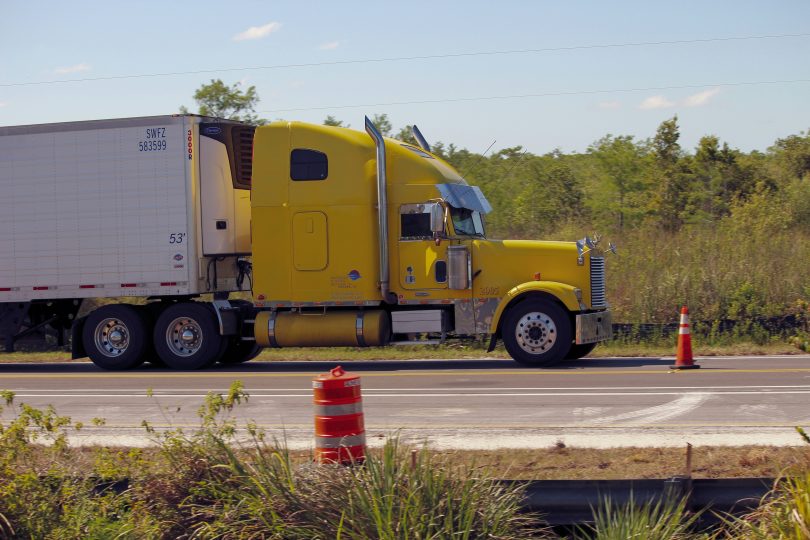

A violent multi-vehicle wreck on Interstate 16 in Twiggs County, Georgia shut down westbound lanes and sent multiple people to the hospital — including one patient airlifted by Life Flight helicopter. The crash serves as a stark reminder of how quickly a truck accident can turn deadly on Georgia’s interstates, and why injured victims need to understand their legal rights from the moment the dust settles.
According to the Twiggs County Sheriff’s Office, emergency crews responded Monday afternoon to a serious injury crash near mile marker 22 on I-16 westbound. The collision involved a semi-truck, a tow truck, and two passenger vehicles. All westbound lanes were closed as first responders worked to treat and transport the injured. Chief Deputy Buddy Long confirmed the crash occurred around 2:30 p.m., with a Life Flight helicopter landing directly on the highway to transport the most critically injured patient for treatment.
Residents were urged to avoid the area and use alternate routes. The Twiggs County Sheriff’s Office asked drivers to exercise patience and extreme caution as first responders worked to clear the scene.
What We Know About the I-16 Crash
Interstate 16 runs approximately 167 miles across central Georgia, connecting Macon to Savannah and passing through some of the state’s most rural and underpatrolled stretches. Twiggs County sits roughly 20 miles east of Macon — an area where heavy commercial truck traffic is common given the corridor’s role in regional freight movement.
The crash near mile marker 22 involved four vehicles, two of them commercial: a semi-truck and a tow truck. The presence of both commercial and passenger vehicles is significant from a legal standpoint. Crashes involving commercial carriers are governed by a separate and more complex set of federal and state regulations, and the injuries they produce tend to be far more severe than those in standard collisions.
A Life Flight response signals that at least one victim sustained injuries serious enough that ground transport wasn’t an option. These are often traumatic brain injuries, spinal cord damage, internal bleeding, or severe crush injuries — the kind that generate six-figure medical bills within days of a crash.
41NBC News reported that Georgia Department of Transportation traffic maps confirmed all westbound lanes near State Route 96 were closed following the crash. Investigations of this nature can take weeks or months before a final determination of fault is made.
Why Truck Accident Cases Are Different
Not all vehicle accidents are created equal under Georgia law. When a commercial semi-truck is involved, the legal landscape shifts considerably — and so does the potential complexity of any resulting claim.
Federal Regulations Apply
The Federal Motor Carrier Safety Administration (FMCSA) sets strict standards for commercial truck drivers and their employers. These rules govern hours of service, vehicle maintenance, cargo loading, driver qualifications, and drug and alcohol testing. A violation of any one of these regulations can establish negligence on the part of the driver or the trucking company. FMCSA data consistently shows that large truck crashes kill or seriously injure tens of thousands of people across the United States each year.
Multiple Parties May Be Liable
In a standard car accident, liability typically falls on one driver or the other. Truck accident cases are rarely that simple. Depending on the facts, the following parties may all bear responsibility:
- The truck driver (fatigue, distraction, impairment, or unsafe driving)
- The trucking company (negligent hiring, inadequate training, pressure to violate hours-of-service rules)
- The cargo loader (improperly secured loads that shift and cause loss of control)
- The vehicle manufacturer (defective parts such as brake systems or tires)
- A maintenance contractor (failure to keep the truck in roadworthy condition)
In the I-16 crash, the involvement of a tow truck alongside a semi raises additional questions about what was happening at that location and whether roadside protocols were being followed correctly at the time of the collision.
Black Box and Electronic Data
Commercial trucks are equipped with electronic logging devices (ELDs) and event data recorders — essentially a “black box” that captures speed, braking, GPS location, and hours of service data in the moments before a crash. This data can be invaluable in proving liability, but trucking companies are not required to preserve it indefinitely. An attorney can send a spoliation letter demanding preservation of this evidence before it is overwritten or destroyed.
What Injured Victims Should Do After a Truck Accident in Georgia
The steps taken — or not taken — in the hours and days after a truck accident can significantly affect a victim’s ability to recover compensation. Here’s what matters most.
- Seek medical treatment immediately. Even if injuries feel minor at first, adrenaline masks pain. Internal injuries and traumatic brain injuries often don’t present obvious symptoms right away. A documented medical evaluation creates a record connecting your injuries to the crash.
- Get the police report. Law enforcement response generates an official crash report that becomes a key piece of evidence. Request a copy as soon as it’s available from the investigating agency — in this case, the Twiggs County Sheriff’s Office.
- Photograph everything you can. Vehicle damage, road conditions, skid marks, debris, and your visible injuries. If you were transported directly from the scene, ask someone you trust to document the area if it’s still accessible.
- Do not give a recorded statement to the trucking company’s insurance adjuster. Insurance adjusters work for the carrier, not for you. Their job is to gather information that minimizes the company’s payout. Anything you say can be used against your claim.
- Preserve your own records. Keep every medical bill, every prescription receipt, every pay stub that reflects missed work. This documentation forms the foundation of your economic damages calculation.
- Consult an attorney before accepting any settlement. Trucking companies carry significant commercial insurance policies, and their insurers often move quickly to offer early settlements — usually far below what the case is actually worth. An experienced attorney can assess the full scope of your damages before you sign anything.
Georgia’s Legal Framework for Truck Accident Claims
Georgia follows a modified comparative fault rule. Under O.C.G.A. § 51-12-33, an injured party can recover damages as long as they are less than 50% at fault for the accident. However, the recovery is reduced by the percentage of fault attributed to the victim. If a jury determines a plaintiff was 20% at fault, their award is reduced by 20%.
This rule matters because trucking companies and their defense teams frequently argue that other drivers contributed to a crash. Having a skilled attorney to counter those arguments — with solid evidence — is what separates a fair recovery from an inadequate one.
Georgia’s statute of limitations for personal injury claims is generally two years from the date of the accident. Wrongful death claims follow the same two-year window. Missing this deadline almost certainly means losing the right to sue.
The Pattern of Serious Crashes on I-16 in Twiggs County
Monday’s collision is not an isolated event. Twiggs County’s stretch of Interstate 16 has seen repeated serious crashes involving commercial trucks over the years — a pattern that points to broader issues of driver behavior, road design, and the sheer volume of freight traffic moving through the corridor.
In a 2023 incident, two semi-trucks collided on I-16 after a tire blowout caused one truck to swerve into the other, sending it over a bridge into a creek below. Earlier that same year, an overturned semi-truck on I-16 westbound near mile marker 30.5 shut down the road and injured its driver. These aren’t freak occurrences — they reflect the consistent danger posed by large commercial vehicles on a high-speed corridor where reaction time is minimal and consequences are severe.
The Georgia Department of Transportation tracks crash data across the state’s highway system. Advocates have repeatedly called for improved safety measures on I-16, including enhanced lighting, rumble strips, and stronger enforcement of commercial vehicle compliance.
What Compensation May Be Available
Victims of serious truck accidents in Georgia may be entitled to recover a range of damages, including:
Economic Damages
- Emergency medical treatment, surgery, and hospitalization
- Ongoing medical care, rehabilitation, and physical therapy
- Lost wages during recovery
- Future lost earning capacity if injuries are permanent
- Vehicle repair or replacement
Non-Economic Damages
- Physical pain and suffering
- Emotional distress and psychological trauma
- Loss of enjoyment of life
- Disfigurement or permanent disability
In cases involving gross negligence — such as a truck driver who was operating in violation of hours-of-service limits or under the influence of substances — Georgia courts may award punitive damages as well. These are designed to punish the responsible party and deter similar conduct.
How a Truck Accident Lawyer Can Help
The gap between what an insurance company initially offers and what a case is actually worth is almost always significant. Truck accident litigation is resource-intensive. Building a strong case requires accident reconstruction experts, medical expert witnesses, FMCSA compliance specialists, and the legal knowledge to navigate complex commercial liability rules.
An attorney can take immediate action to:
- Send spoliation letters to preserve electronic logging device (ELD) data and dashcam footage
- Investigate the trucking company’s safety record and compliance history
- Retain accident reconstruction experts to establish how the crash occurred
- Identify all potentially liable parties — including parties the victim didn’t know existed
- Handle all communications with insurance companies on the victim’s behalf
- Negotiate a settlement that accounts for long-term medical needs, not just current bills
Most truck accident attorneys work on a contingency fee basis, meaning there is no upfront cost to hire one. The attorney is paid only if compensation is recovered.
Frequently Asked Questions About Georgia Truck Accidents
How long do I have to file a truck accident claim in Georgia?
Georgia’s statute of limitations for personal injury claims is generally two years from the date of the accident. If a loved one was killed, the family has two years from the date of death to file a wrongful death claim. Acting quickly matters — evidence degrades, witnesses forget details, and critical data on commercial vehicles can be overwritten.
Can I sue the trucking company, not just the driver?
Yes. Under the legal doctrine of respondeat superior, employers can be held liable for the negligent acts of their employees acting within the scope of their employment. Additionally, trucking companies can face direct liability for negligent hiring, training, supervision, or maintenance practices.
What if I was a passenger in one of the other vehicles?
Passengers are generally not found at fault in multi-vehicle crashes and have the same right to pursue compensation as any other injured party. You may have claims against the truck driver, the trucking company, or another at-fault driver depending on the facts.
What should I say to the insurance adjuster who calls me?
As little as possible. Provide your name, confirm the date of the accident, and say you are represented by an attorney — or that you intend to consult one. Do not describe your injuries, explain how the crash happened, or accept any settlement offer without legal counsel.
Is Life Flight transport covered by insurance after a truck accident?
Air ambulance transport is expensive — often $20,000 to $50,000 or more. Whether it is covered depends on your health insurance policy and the specific circumstances. In a personal injury claim, the cost of Life Flight transport is typically recoverable as part of your medical damages from the at-fault party.
What evidence is most important in a truck accident case?
Electronic logging device data, dashcam footage (from both the truck and nearby vehicles), the official police report, driver logs and inspection records, the trucking company’s maintenance records, witness statements, and photographs from the scene. An attorney can move quickly to secure this evidence before it disappears.
How is fault determined when multiple vehicles are involved?
Georgia law allows fault to be apportioned among multiple parties. An accident reconstruction expert, physical evidence, witness accounts, and electronic data all contribute to establishing each party’s degree of responsibility. As long as a victim is less than 50% at fault, they can still recover compensation under Georgia’s comparative fault rules.
Do I need a lawyer if the trucking company’s insurance company has already reached out?
Yes. Early contact from an insurance adjuster — especially if they move quickly with a settlement offer — is a sign that the company recognizes its exposure. Their offer at that stage almost never reflects the full value of the claim. Having legal representation levels the playing field.
Speak With an Attorney About Your Truck Accident Claim
If you or someone you love was injured in the I-16 crash in Twiggs County — or any truck accident in Georgia — the decisions made in the coming days will shape the outcome of any legal claim. Evidence needs to be preserved. Insurance companies need to be handled carefully. And the full extent of your injuries and losses needs to be documented before any settlement is considered.
Contact our truck accident lawyers in Atlanta today for a free consultation. There is no cost to speak with an attorney, and no fee unless compensation is recovered on your behalf.